Ceiling Fan Installation in the Home and High Ceilings
Introduction
Ceiling fans are one of the best solutions for ventilating and cooling indoor spaces in homes. These devices are widely appreciated for their low energy consumption and effective airflow distribution, making them a popular choice in many households. In this article, we will focus on installing ceiling fans in high-ceiling environments and address the associated challenges and key considerations.
1. The Importance of Using Ceiling Fans
Before diving into the installation process for high ceilings, it’s essential to understand why ceiling fans are favored:
- Energy Efficiency: Ceiling fans consume much less energy than more complex HVAC systems like air conditioners.
- Uniform Air Circulation: Ceiling fans distribute air evenly throughout the room, providing consistent ventilation.
- Easy and Cost-Effective Installation: Ceiling fan installation is generally quicker and more affordable than other complex air conditioning systems.
Ceiling Fan Installation in the Home and High Ceilings
2. Choosing the Right Ceiling Fan for Your Space
Selecting the correct fan model is crucial for effective performance:
2.1. Fan Size
Ceiling fans come in various sizes. For small rooms, fans with a diameter of less than 120 cm are ideal. For larger spaces, opt for fans with a larger diameter to ensure proper airflow.
2.2. Motor Power
The motor’s power is essential in generating airflow. For smaller rooms, a motor with 70-90 watts should be sufficient. However, for larger or high-ceiling rooms, you’ll need a fan with a more powerful motor.
2.3. Fan Design and Appearance
Ceiling fans come in a range of designs. When choosing a fan, it’s important to consider the style and décor of your home to match your interior design preferences.
Ceiling Fan Installation in the Home and High Ceilings
3. Installing a Ceiling Fan in High Ceilings
In rooms with high ceilings, installing a ceiling fan presents a few challenges that need careful attention:
3.1. Choosing the Right Installation Location
- The fan should be installed in the center of the room to ensure uniform air distribution.
- There should be at least 30 cm of space between the fan and the walls to allow for proper airflow.
3.2. Correct Ceiling Height for Installation
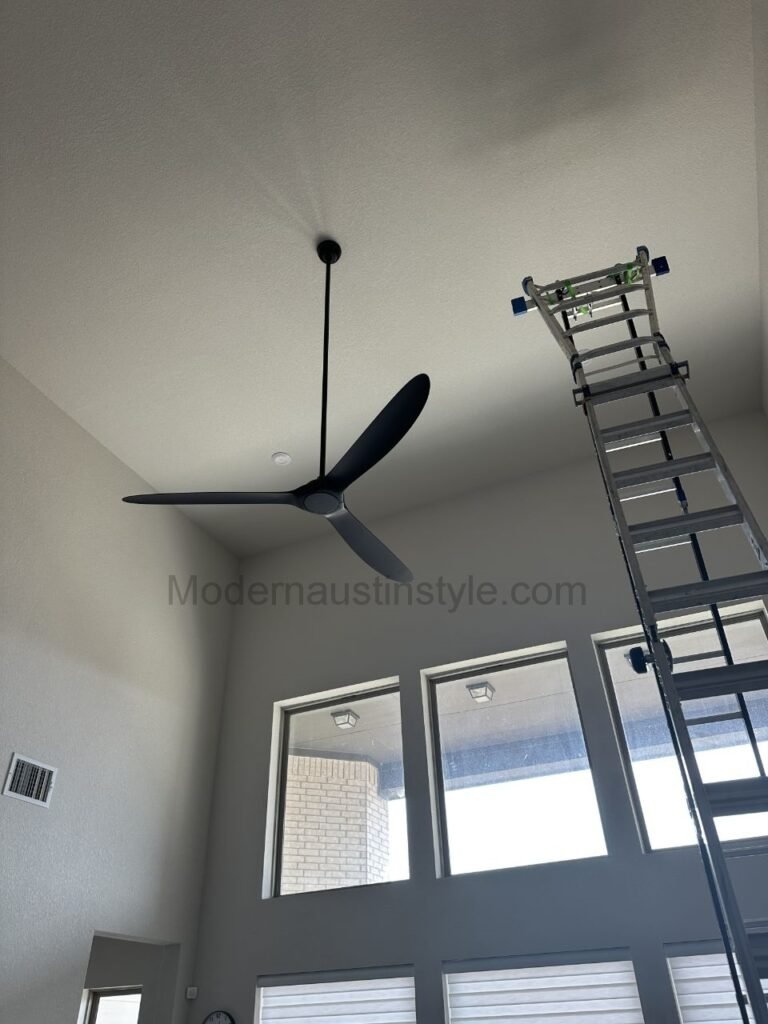
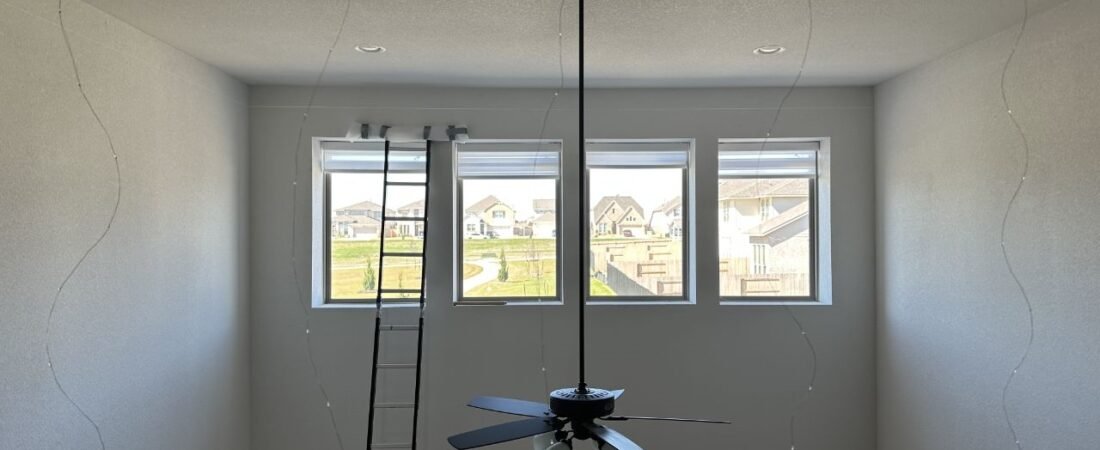
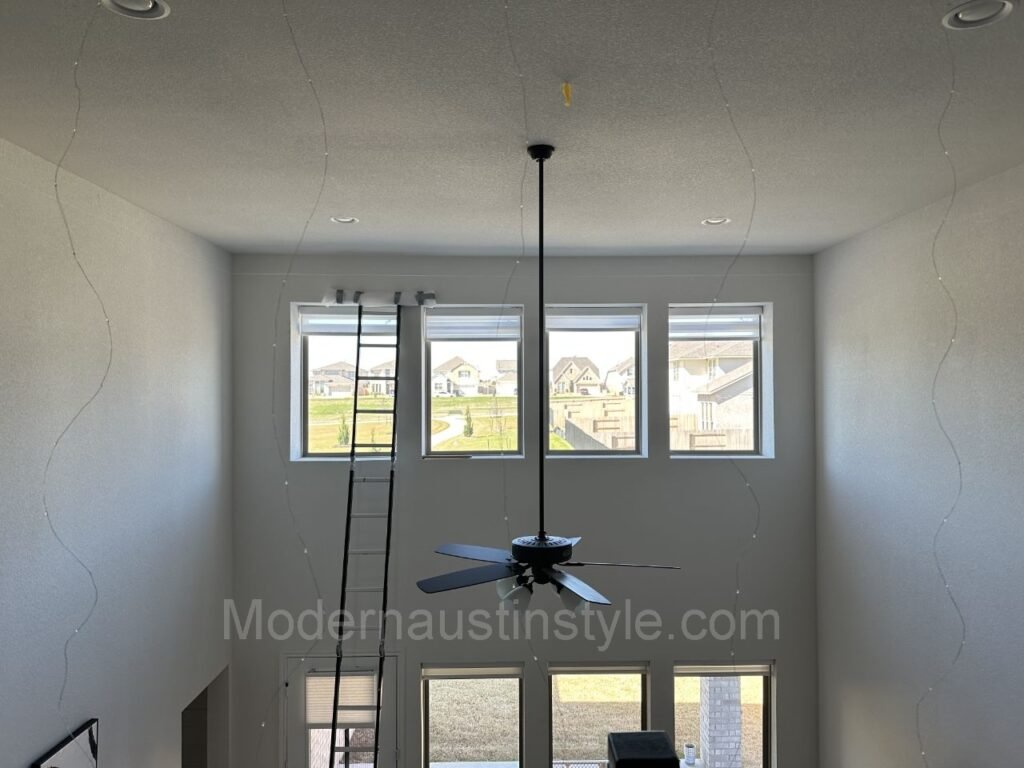
For rooms with high ceilings, the fan should be installed at a height of around 2.5 to 3 meters from the floor. In such cases, longer downrods are used to position the fan properly, allowing it to perform effectively.
Ceiling Fan Installation in the Home and High Ceilings
3.3. Installing the Downrod and Mounting Bracket
The downrod used for installation must be sturdy enough to hold the fan securely. Additionally, the mounting bracket should be tightly fastened to the ceiling to ensure the fan remains stable during operation.
3.4. Using Proper Tools
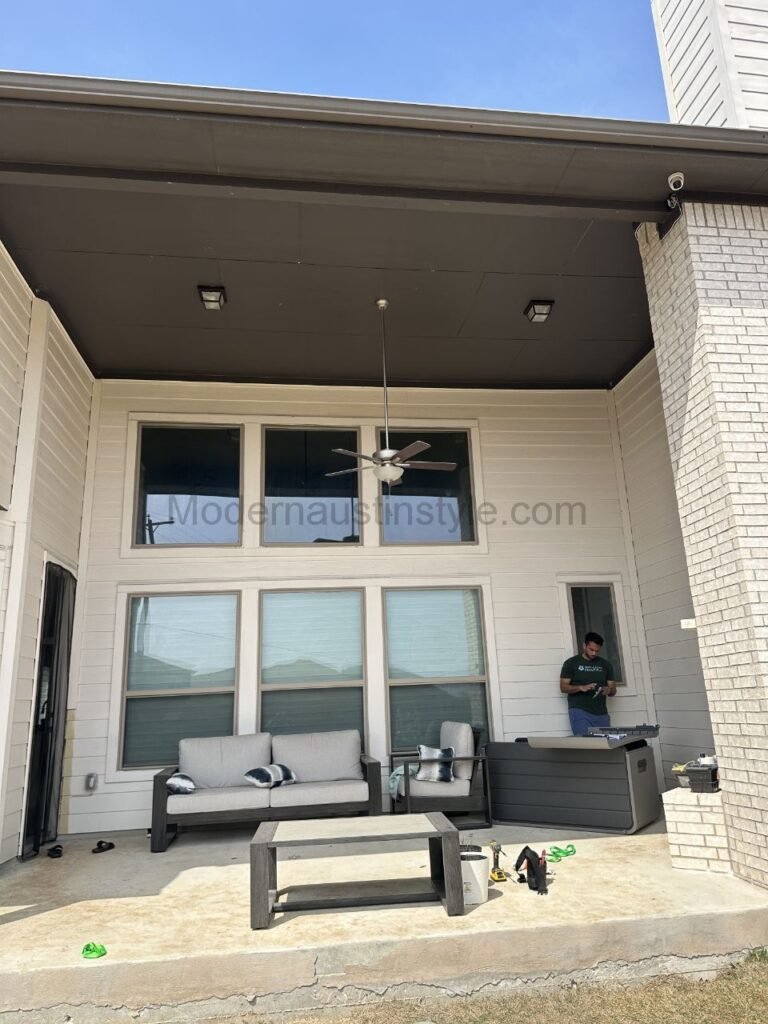
When installing the fan, use appropriate tools such as screwdrivers, pliers, and wire cutters. Additionally, wear protective gear like gloves and safety goggles to minimize risks.
3.5. Checking the Electrical Connection
Proper electrical connection is crucial for safety. Make sure the wiring is done correctly, and if you’re unsure, it’s advisable to hire a professional electrician.
Ceiling Fan Installation in the Home and High Ceilings
4. Safety Tips for Installing Ceiling Fans
Installing a ceiling fan in high ceilings requires adherence to safety protocols:
4.1. Turn Off the Power
Before starting the installation, ensure the electrical power is turned off to prevent any electrical accidents.
4.2. Use Proper Safety Equipment
To install the fan safely at height, use appropriate ladders, safety harnesses, and helmets to avoid falls and injuries.
4.3. Check the Ceiling’s Structural Integrity
Ensure the ceiling can support the weight of the fan. If in doubt, consult with a structural engineer to confirm the ceiling’s strength.
Ceiling Fan Installation in the Home and High Ceilings
5. Maintenance and Servicing of Ceiling Fans
Proper maintenance is crucial for extending the lifespan of your ceiling fan and ensuring it runs efficiently:
- Clean the Blades: Dust and debris can accumulate on the fan blades, reducing its efficiency. Clean the blades regularly to maintain performance.
- Check the Electrical Connections: Periodically inspect the fan’s electrical connections to ensure they are secure and safe.
- Inspect the Motor Performance: Listen for unusual sounds or changes in speed to determine if the motor requires servicing.
🛠️ Tools Required for Ceiling Fan Installation
Main Tools:
Ceiling Fan Installation in the Home and High Ceilings
| Tool | Purpose |
|---|---|
| Electric or Cordless Drill | Drilling holes for mounting brackets and electrical boxes |
| Flathead & Phillips Screwdrivers | Tightening and loosening screws |
| Adjustable Wrench or Allen Key | Securing nuts and specific fasteners |
| Pliers and Wire Cutter | Stripping, cutting, and bending wires |
| Voltage Tester (Non-contact or Tester Screwdriver) | Ensuring power is off before wiring |
| Sturdy Ladder | Reaching the ceiling, especially in rooms with high ceilings |
| Measuring Tape | Determining exact placement and distances |
| Level Tool | Making sure the fan is mounted evenly and straight |
Safety Gear:
- Insulated Gloves – Protects against shock or cuts
- Safety Glasses – Shields eyes from dust and debris
- Helmet and Safety Harness – For secure work at elevated heights
Ceiling Fan Installation in the Home and High Ceilings
Additional Installation Materials:
Electrical Tape and Wire Connectors – For safe insulation and wire joining
Downrod (Extension Rod) – For lowering the fan in high-ceiling rooms
Fan-Rated Electrical Box – Designed to support the fan’s weight and movement
Heavy-duty Screws, Anchors, and Brackets – For stable and secure mounting
✅ Optimized Step-by-Step Guide to Ceiling Fan Installation
Ceiling Fan Installation in the Home and High Ceilings
1. Preparation
- Turn off the power at the main circuit breaker.
- Gather essential tools and safety gear: drill, screwdrivers, voltage tester, ladder, pliers, insulated gloves, and safety glasses.
- Ensure the floor area is dry and safe for working at height.
2. Inspect the Ceiling and Electrical Box
- Make sure the ceiling electrical box is fan-rated and can support the weight and vibration of the fan.
- If not, replace it with a metal or reinforced fan-rated box.
3. Install the Mounting Bracket
- Secure the mounting bracket to the electrical box using appropriate screws and wall plugs.
- Use a level to ensure the bracket is installed evenly.
4. Assemble the Fan Unit
- If using a downrod (for high ceilings), attach it to the motor and feed the wires through it.
- If the fan blades come separately, attach them later to make ceiling mounting easier.
Ceiling Fan Installation in the Home and High Ceilings
5. Mount the Fan to the Ceiling
- Lift the fan motor and place it into the mounting bracket (depending on model, it may hang in a slot or be screwed in).
- Connect the wires safely using wire connectors and tape:
- Live (Brown/Black) → to house live wire
- Neutral (Blue) → to house neutral
- Ground (Green/Yellow) → to ground wire or metal housing
6. Attach the Blades (if separate)
- Secure the fan blades to the motor using the provided screws.
- Make sure all blades are balanced to prevent wobbling.
7. Install the Canopy (Decorative Cover)
- Slide the canopy up to cover the mounting bracket and wires.
- Tighten it with screws or clips as per your fan’s model.
Ceiling Fan Installation in the Home and High Ceilings
8. Final Test
If there’s wobbling or noise, recheck blade balance and all mounting screws.
Turn the power back on.
Test the fan at different speeds and directions.
🏠 Best Ceiling Fan Blade Materials for Home Use
Choosing the right blade material depends on several key factors: room type, humidity, aesthetics, durability, and safety. Below is a breakdown of the most common materials used in ceiling fans for residential settings:
Ceiling Fan Installation in the Home and High Ceilings
1. Wooden Blades (MDF or Natural Wood)
Best for: Bedrooms, living rooms, family rooms
Pros:
- Warm, decorative look
- Quiet operation
- Complements classic and modern wood decor
Cons: - Not suitable for humid areas – may warp or crack over time
2. Plastic Blades (ABS or Durable PVC)
Best for: Kitchens, bathrooms, or humid areas
Pros:
- Moisture and corrosion resistant
- Lightweight and quiet
- Generally more affordable
Cons: - Simpler look compared to wood or metal
Ceiling Fan Installation in the Home and High Ceilings
3. Metal Blades (Aluminum or Stainless Steel)
Best for: Large rooms with high ceilings, hallways, or industrial-style spaces
Pros:
- Very durable and long-lasting
- Higher airflow due to solid structure
Cons: - Tends to be noisier than plastic or wood
- May not be ideal for bedrooms or quiet areas
4. Mixed Materials (Wood + Metal or Plastic + Metal)
Best for: Modern interiors needing both durability and style
Pros:
- Combines strength and visual appeal
- Suitable for semi-humid environments
Cons: - Typically more expensive
✅ Material Recommendations by Room:
| Room Type | Recommended Blade Material |
|---|---|
| Bedroom | Quiet wood or plastic blades |
| Living Room | Natural wood or mixed materials |
| Kitchen/Bathroom | Moisture-resistant plastic |
| High Ceilings/Duplexes | Metal or mixed materials for stronger airflow |
⚠️ Important Tips:
Always choose fans from reputable brands with proper safety certifications.
The fan motor housing material also matters – choose rust-resistant aluminum or well-insulated plastic.
If the fan includes lighting, consider how the lamp cover material (acrylic, glass, or metal) fits your décor.
Conclusion
Installing a ceiling fan in a room with high ceilings presents unique challenges, but with proper planning and attention to detail, you can enjoy all the benefits of these energy-efficient and effective devices. By selecting the right fan, ensuring correct installation, and performing regular maintenance, you can extend the lifespan of your ceiling fan and optimize its performance in your home.
📞Need help?
Let us take care of the hard work while you sit back and relax.
📍Address: 3411 Monument Dr, Round Rock, TX 78681-3756
☎️Phone Number: 7373306737
🔵Visit: https://modernaustinstyle.com