Ceiling Ventilation Installation in High-Height Living Rooms
Introduction
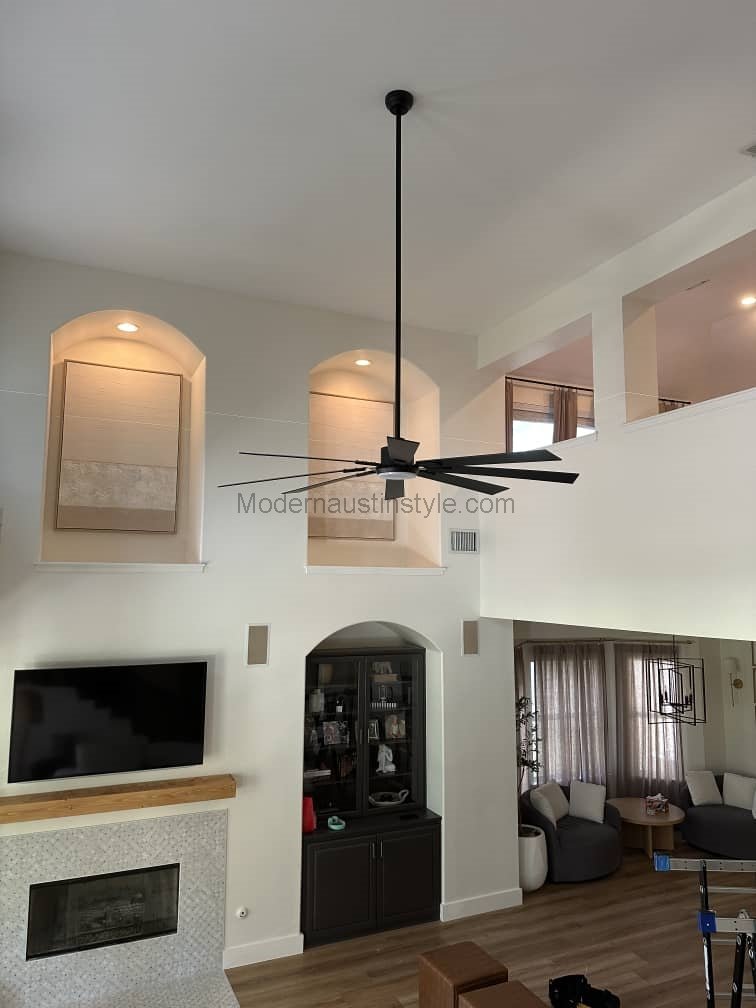
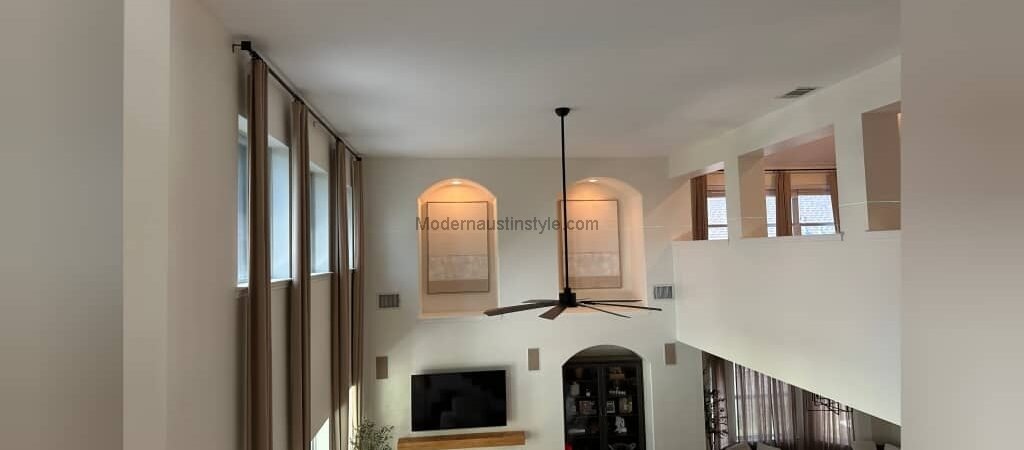
A living room with a high ceiling always brings a sense of grandeur, extra light, and spaciousness to a home. However, from a ventilation perspective, it presents a significant challenge. Unlike standard spaces with heights between 2.6 and 3 meters, ceilings above 4 or 5 meters behave differently in temperature distribution and airflow. In such cases, heat tends to accumulate in the upper layers, while cool air remains in the lower layers. This results in reduced thermal comfort and increased energy costs.
In such conditions, installing a suitable ceiling-mounted ventilation system can achieve three main goals:
- Maintain uniform temperature across the entire height of the space
- Save energy
- Extend the lifespan of heating and cooling equipment
Ceiling Ventilation Installation in High-Height Living Rooms
Section 1: Scientific Analysis of Airflow in High Ceilings
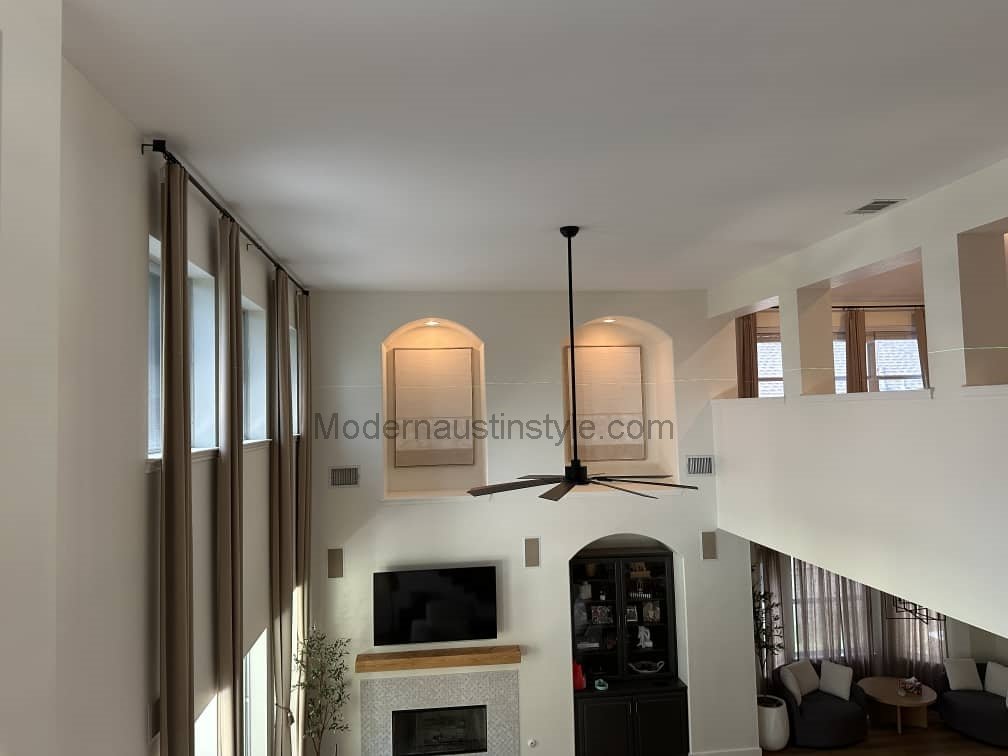
Warm air is lighter than cool air and, therefore, naturally rises — a phenomenon known as thermal stratification.
In a living room with a 6-meter ceiling, the temperature difference between the floor and the ceiling can reach 8–10°C. This means wasted heat in winter and insufficient cooling in summer.
Scientific solution: Using ceiling-mounted HVAC systems or large industrial ceiling fans can break this stratification and push warm air downward, reducing the temperature difference to less than 2°C.
Section 2: Challenges and Specific Requirements for High Ceilings
- Higher equipment capacity
Due to the larger air volume, the unit must have greater cooling or heating capacity. - Installation safety
The increased height raises the risk of falls and requires specialized installation equipment. - Aesthetic integration
In a living room, the equipment should have an elegant appearance that complements the interior design. - Low noise level
Any noise in a large space echoes more, making low-noise units essential.
Ceiling Ventilation Installation in High-Height Living Rooms
Section 3: Suitable Systems for High Ceilings
| System Type | Advantages | Disadvantages | Applications |
|---|---|---|---|
| Large HVLS Ceiling Fan | Low power consumption, even air distribution | No direct cooling | Improves airflow in summer and winter |
| Concealed Ceiling Fan Coil Unit | Effective heating and cooling, independent zone control | Requires water piping | Luxury spaces with multiple thermal zones |
| Cassette AC Unit | Sleek appearance, four-way airflow | Higher electricity consumption | Modern living rooms |
| Ceiling-Mounted Air Handler | High capacity, can connect to a chiller | High installation cost | Very large halls |
Ceiling Ventilation Installation in High-Height Living Rooms
Section 4: Choosing the Right Unit
- Based on regional climate
- Hot, dry areas → Units with humidifiers and dust filters
- Humid areas → Rust-resistant units with high dehumidification capacity
- Based on ceiling height
- Up to 4 m → Cassette AC or standard fan coil
- Above 6 m → HVLS fan or ceiling air handler
- Based on interior design style
- Modern → Concealed cassette units
- Classic → Decorative ceiling fans
Section 5: Cooling and Heating Capacity Calculation
Basic formula:
javaCopyEditCapacity (BTU) = Room volume (m³) × 60 to 80 (for cooling)
Example:
Living room: 6 × 8 m with a 5 m ceiling
Volume = 6 × 8 × 5 = 240 m³
Approximate capacity = 240 × 70 ≈ 16,800 BTU (minimum)
Note: For heating, the calculation coefficient may vary depending on insulation quality.
Ceiling Ventilation Installation in High-Height Living Rooms
Section 6: Installation Steps for High-Height Ceilings
- Initial inspection
- Accurate measurement
- Determining power and piping routes
- Technical design
- Selecting the unit type and location
- Calculating required capacity
- Preparing safety equipment
- Hydraulic lift or secure scaffolding
- Installing the support structure
- Using industrial-grade bolts and anchors
- Unit installation
- Connecting to electrical and piping systems
- Leak and performance testing
- Adjustment and calibration
- Testing temperature, airflow, and noise level
Ceiling Ventilation Installation in High-Height Living Rooms
Section 7: Key Safety Tips
- Always have two or more people during installation
- Turn off the main power before starting work
- Use a safety harness
- Avoid installation in stormy or rainy weather
Section 8: Maintenance Schedule
| Task | Frequency |
|---|---|
| Clean filters | Every 3 months |
| Check connections | Every 6 months |
| Full service | Once a year |
| Fan lubrication | As needed |
Ceiling Ventilation Installation in High-Height Living Rooms
Section 9: Comparison of Popular Brands
- Gree – Quiet cassette models
- Daikin – High efficiency, higher price
- Mitsubishi Electric – Long-lasting, high-quality components
- Hisense – Affordable, variety of models
Section 10: Quick Installation Checklist
- Capacity calculated
- Electrical route checked
- Safety equipment ready
- Mounting structure leveled
- Unit tested
Ceiling Ventilation Installation in High-Height Living Rooms
Types of Brackets Used for Installing Ceiling Ventilation and Fans
Choosing the right bracket for installing ceiling-mounted ventilation units or fans depends on the unit’s weight, the ceiling type, and the installation method. The correct bracket not only ensures safety but also helps reduce vibration transmission and extends the lifespan of the equipment.
1. L-Shaped Bracket (L-Bracket)
- Material: Galvanized steel or high-strength carbon steel
- Features: Simple connection to steel beams or concrete ceilings using expansion bolts or anchors
- Application: Ceiling-mounted fan coils, small cassette air conditioners
- Advantages: High strength, cost-effective
Ceiling Ventilation Installation in High-Height Living Rooms
2. U-Frame Bracket
- Material: Heavy-duty steel with anti-rust coating
- Features: Frame-like design to fully hold the unit in place
- Application: Ceiling-mounted air handling units (AHUs) or large fan coil units
- Advantages: High stability, reduced vibration with optional angle reinforcements
3. Suspension Bracket with Threaded Rod or Steel Cable
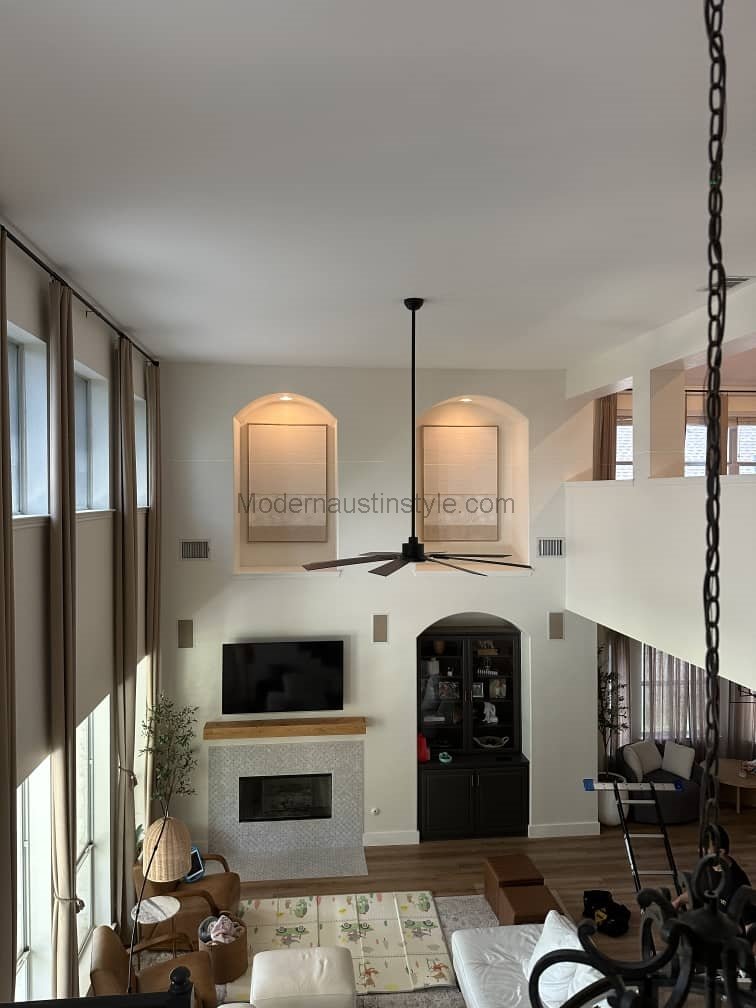
- Structure: Connected to the ceiling using threaded rods, industrial chains, or steel cables
- Features: Adjustable height and reduced vibration transmission to the ceiling
- Application: Large industrial fans, HVLS fans, ducted ceiling systems
- Advantages: High flexibility in installation positioning
Ceiling Ventilation Installation in High-Height Living Rooms
4. Mounting Plate Bracket
- Material: Perforated steel plate for direct attachment
- Application: Decorative ceiling fans, small concealed ventilation units
- Advantages: Quick installation and compact appearance
5. Vibration Isolation Bracket
- Features: Equipped with rubber pads or spring isolators
- Application: Residential buildings and noise-sensitive spaces
- Advantages: Reduces noise and vibration transmission to the structure
Ceiling Ventilation Installation in High-Height Living Rooms
Technical Tips for Choosing the Right Bracket
For heavy equipment, the use of reinforced steel angles or profiles is recommended.
Unit weight and dimensions must be determined before selection.
Ceiling material and load capacity (concrete, steel, or drywall) should be checked.
For false ceilings, connections must be made to the main structural frame, not just the suspended ceiling layer.
Ceiling Ventilation Installation in High-Height Living Rooms
Comparison of Bracket Types for Ceiling Ventilation and Fan Installation
| Bracket Type | Approx. Load Capacity | Advantages | Disadvantages | Primary Application |
|---|---|---|---|---|
| L-Bracket | 50–80 kg (depending on steel thickness) | Easy installation, affordable, widely available | Not suitable for very heavy units | Ceiling-mounted fan coils, small cassette AC units |
| U-Frame Bracket | 100–200 kg | High stability, even weight distribution | Heavier and bulkier than L-brackets | Ceiling-mounted air handling units, large fan coils |
| Suspension Bracket | 50–150 kg | Adjustable height, reduced vibration, flexible positioning | Requires a strong ceiling or beam for anchoring | Industrial fans, HVLS fans, ducted ceiling systems |
| Mounting Plate | 30–50 kg | Quick installation, compact appearance | Limited load capacity | Decorative ceiling fans, small concealed ventilation units |
| Vibration Isolation Bracket | 30–100 kg (depending on model) | Reduces noise and vibration, ideal for residential use | Usually more expensive than standard types | Fan coils, residential air conditioners, small AHUs |
Ceiling Ventilation Installation in High-Height Living Rooms
💡 Conclusion:
If the unit is large but height adjustment is required → Suspension Bracket is more practical.
If the unit is heavy and stability is a priority → U-Frame Bracket is the best choice.
If vibration reduction is needed → Vibration Isolation Bracket is ideal.
For quick installation of light units → Mounting Plate or L-Bracket will suffice.
Ceiling Ventilation Installation in High-Height Living Rooms
Types of Fans and Their Importance in Ventilation Systems
Fans play a vital role in ventilation, and choosing the right type based on the space and requirements directly impacts air quality and energy efficiency.
1. Axial Fan
- Function: Moves air along the axis of the fan blades
- Features: High airflow rate, low pressure, simple and cost-effective design
- Applications: Large halls, general ventilation, ceiling fans, and evaporative coolers
- Importance: Ideal for circulating large volumes of air in open and tall spaces
2. Centrifugal Fan
- Function: Throws air perpendicular to the intake axis with higher pressure
- Features: High static pressure, suitable for long duct runs
- Applications: Air handling units, fan coils, industrial ventilation
- Importance: Essential for complex systems requiring high air pressure
3. Mixed Flow Fan
- Function: Combines features of axial and centrifugal fans
- Features: Medium pressure, adequate airflow, compact size
- Applications: Modern HVAC systems, duct fans
- Importance: Balances pressure and airflow in spaces with limited room
4. HVLS Fan (High Volume Low Speed)
- Function: Large diameter blades running at low speed, moving large volumes of air
- Features: Low energy consumption, broad ventilation and cooling effect
- Applications: Sports halls, warehouses, spaces with high ceilings
- Importance: Disrupts temperature stratification and improves ventilation in tall spaces
5. Inline Duct Fan
- Function: Boosts airflow inside ventilation ducts
- Features: Concealed installation, reduces pressure drop along ducts
- Applications: Central ventilation systems, long duct runs
- Importance: Maintains system efficiency and ensures even air distribution
6. Exhaust Fan
- Function: Extracts stale or hot air and expels it outside
- Features: Simple, cost-effective, reduces odors and humidity
- Applications: Kitchens, bathrooms, workshops
- Importance: Crucial for hygiene and preventing accumulation of pollutants
Summary
Choosing the right fan depends on required airflow, pressure, space, and application. In tall spaces and large halls, combining axial or HVLS fans for air circulation with centrifugal or duct fans for air delivery offers optimal performance.
Conclusion
Installing ceiling ventilation in a high-ceiling living room is not a simple mounting task; it’s a combination of technical calculations, precise equipment selection, and safe execution. With the right choice and regular maintenance, you can enjoy years of thermal comfort, lower energy consumption, and a visually pleasing space.
📞Need help?
Let us take care of the hard work while you sit back and relax.
📍Address: 3411 Monument Dr, Round Rock, TX 78681-3756
☎️Phone Number: 7373306737
🔵Visit: https://modernaustinstyle.com